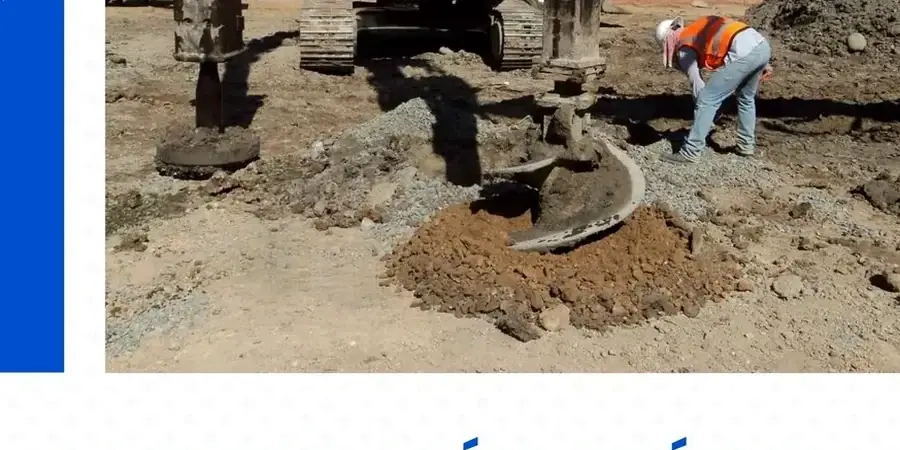
Ground improvement in Brandon, Manitoba represents a critical branch of geotechnical engineering focused on modifying and enhancing the physical properties of native soils to support safe, stable, and durable construction. In this region, where the landscape is shaped by the legacy of glacial Lake Agassiz, the near-surface geology is dominated by glaciolacustrine clays, silts, and organic deposits that often exhibit low bearing capacity, high compressibility, and sensitivity to moisture changes. These challenging conditions make it impractical to build directly on untreated ground for many types of infrastructure. The improvement category encompasses a suite of engineered techniques designed to increase soil strength, reduce settlement potential, control groundwater, and mitigate liquefaction risks, ensuring that foundations, roadways, and industrial facilities perform reliably over their design life. For Brandon’s growing residential subdivisions, commercial hubs, and agricultural processing plants, understanding and applying the right ground improvement method is not just a technical choice but a fundamental requirement for project viability.
The local geology of Brandon is dominated by the sediments of the Assiniboine River valley and the broader Lake Agassiz plain. These deposits include thick sequences of soft, normally consolidated to slightly overconsolidated silty clays, often interbedded with silt and fine sand lenses. The presence of swelling clays in some areas, along with a high regional water table, introduces additional challenges such as volumetric instability and drainage problems. Seasonal freeze-thaw cycles further degrade the engineering properties of near-surface soils. Given this context, a desk study and site investigation are mandatory under Manitoba’s geotechnical practice standards to characterize stratigraphy, index properties, and groundwater conditions. The selection of an appropriate ground improvement strategy must account for these local factors, as a solution that works well in drier, sandier terrains may be entirely unsuitable for Brandon’s moisture-sensitive, fine-grained soils.
Applicable norms and guidelines in Manitoba derive from the National Building Code of Canada (NBCC), with geotechnical design carried out in accordance with the Canadian Foundation Engineering Manual (CFEM) and relevant CSA standards. The City of Brandon also enforces its own zoning and development bylaws, which reference provincial requirements for geotechnical submissions, particularly for subdivisions and public infrastructure. Professional practice in Manitoba is regulated by Engineers Geoscientists Manitoba, requiring that ground improvement designs be sealed by a qualified professional engineer with demonstrated competence in geotechnical engineering. Key design considerations mandated by these frameworks include limit states design (ULS and SLS), environmental impact assessments for chemical stabilization methods, and long-term performance monitoring. For projects involving dynamic compaction or deep soil mixing, vibration and noise control may also be subject to municipal nuisance bylaws, making early regulatory coordination essential.
Ground improvement in Brandon is required for a wide range of project types. Residential subdivisions on former agricultural land often need preloading design to accelerate consolidation and reduce post-construction settlements without the cost and complexity of surcharge import. Industrial facilities, including grain elevators and food processing plants, frequently rely on dynamic compaction design to densify loose granular fills or silty soils, providing a stiff, uniform foundation for heavy equipment and high live loads. Transportation corridors, such as highway embankments and railway spurs, benefit from lime and cement stabilization to improve the strength and durability of moisture-sensitive subgrades, reducing maintenance and extending pavement life. In areas with complex interbedded stratigraphy or where deep soft clay layers exist, deep soil mixing design offers a versatile in-situ solution to create soil-cement columns that reinforce the ground and control settlements. Effective drainage is another cornerstone of improvement, with geotechnical drainage design essential for managing groundwater, preventing hydrostatic pressure buildup, and ensuring the long-term performance of stabilized masses. Each of these methods addresses a specific geotechnical risk profile, and their selection hinges on a thorough understanding of local soil behavior and project requirements.
The primary challenges stem from the region’s glaciolacustrine clay and silt deposits, which typically exhibit low shear strength, high compressibility, and sensitivity to moisture. A high water table and seasonal freeze-thaw cycles further complicate construction. These conditions often lead to excessive settlement, poor drainage, and unstable subgrades, requiring engineered solutions like preloading, stabilization, or deep mixing to achieve adequate bearing capacity and long-term performance for structures and pavements.
Ground improvement design must comply with the National Building Code of Canada and the Canadian Foundation Engineering Manual. Relevant CSA standards for materials and testing apply, while Engineers Geoscientists Manitoba regulates professional practice. Local City of Brandon bylaws may impose additional requirements for vibration, noise, and environmental protection, particularly for methods using chemical binders or dynamic energy. A sealed design by a qualified geotechnical engineer is mandatory.
Method selection depends on a detailed geotechnical investigation that identifies soil stratigraphy, strength, compressibility, and groundwater conditions. For thick soft clays, preloading or deep soil mixing may be appropriate; for loose granular soils, dynamic compaction can be effective. The project’s loading requirements, settlement tolerances, timeline, and environmental constraints are also key. A geotechnical engineer evaluates these factors against the performance curves and limitations of each technique to recommend the optimal approach.
When designed and executed correctly, improved ground can meet or exceed the performance of natural competent soils. Long-term expectations include meeting specified settlement limits, maintaining design shear strength, and resisting degradation from freeze-thaw cycles or moisture fluctuations. Performance is verified through post-construction monitoring such as settlement plates, inclinometers, and in-situ strength testing. Maintenance of drainage systems, where installed, is critical to prevent re-saturation and loss of improvement in chemically stabilized or preloaded soils.